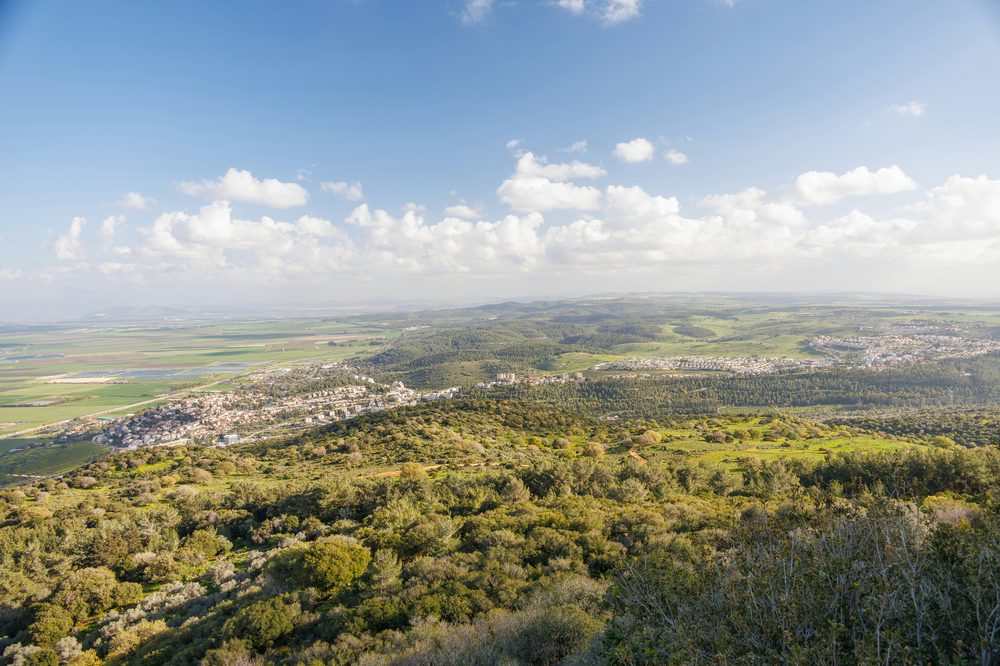
Long before the final battle in Revelation, kings were already being gathered to Armageddon.
Revelation 16 calls it “a place called in the Hebrew tongue Armageddon”: Har-Megiddo, the mountain of Megiddo. And Megiddo is a real place, where real kings fought real battles. One of them was among the most godly kings who ever lived.
His enemy sent him a message. In plain words, it said: I’m not here to fight you. God sent me somewhere else. Stay out of this, or God will destroy you. And the Bible later confirms that message really did come from God.
Most people would stay home. This king didn’t. He put on a disguise and rode straight into the battle at Megiddo.
What pulled him there? The same kind of voice Revelation describes: a voice that gathers people to the place of the crowd, and convinces them to sacrifice themselves for a battle God never called them to fight.
He never came home alive. And the family and the nation he thought he was protecting paid for that battle for the rest of their lives. They were left defenseless.
New to the series? Part 1, “Why Frogs?”, explains why God described these spirits as frogs and how they get people to depart early from the teaching of Jesus. Part 2, “What Does Armageddon Mean?”, shows that Megiddo’s name is tied to a Hebrew word that means both “to gather in a crowd” and “to cut yourself.”
This post goes with Episode 3 of our video series, The Place of the Crowd. Watch the series playlist on our YouTube channel.
What Happened to Josiah at Megiddo?
Josiah, the godly king of Judah, went out to fight Pharaoh Necho of Egypt in the valley of Megiddo, even though Necho warned him to stay away. The Bible says that warning came “from the mouth of God” (2 Chronicles 35:22). Josiah disguised himself, went anyway, and was shot by archers. He died at thirty-nine, and his sons and his nation paid the price.
The Place of the Crowd
In this series, we’re looking at Revelation 16, where three unclean spirits like frogs go out to gather the kings of the earth to a place called Armageddon, the mountain of Megiddo. In Part 2 we saw that Megiddo’s name is tied to a Hebrew word that means both “to gather in a crowd” and “to cut yourself.” It’s the same word used for the prophets of Baal slashing themselves in worship near the valley of Megiddo. And every major story at Megiddo ends with people bleeding out by the very battle they rode into.
Today we look at the saddest of those stories, because it didn’t happen to a wicked man. It happened to one of the best. And we’ll see how an unclean spirit can get even a good person to sacrifice himself in a way that doesn’t give life. It just cuts.
Who Was Josiah?
Josiah became king of Judah when he was only eight years old (2 Kings 22:1). His father and grandfather had filled the land with idols, but Josiah turned the whole nation back to God.
During his reign, workers repairing the temple found the book of the law, which had been lost. When Josiah heard it read, he tore his clothes and wept (2 Kings 22:11, 19). Then he tore down the altars of Baal, cleaned out the temple, and led the greatest Passover Israel had seen since the days of the judges (2 Kings 23:22).
And the Bible gives him this remarkable verdict:
"And like unto him was there no king before him, that turned to the LORD with all his heart, and with all his soul, and with all his might, according to all the law of Moses; neither after him arose there any like him." — 2 Kings 23:25 (KJV)
No king before him. No king after him. That’s Josiah.
The Promise He Already Had
Here’s something important to know before we get to the battle. When Josiah first heard the book of the law, he sent men to inquire of the LORD through the prophetess Huldah. And God sent him a personal promise.
"Behold therefore, I will gather thee unto thy fathers, and thou shalt be gathered into thy grave in peace; and thine eyes shall not see all the evil which I will bring upon this place." — 2 Kings 22:20 (KJV)
God had already told Josiah that judgment was coming on Jerusalem, but not in his lifetime. He would be spared. His future was already secured.
Keep that in your mind, because it makes what happens next a real warning.
The Warning
"After all this, when Josiah had prepared the temple, Necho king of Egypt came up to fight against Charchemish by Euphrates: and Josiah went out against him." — 2 Chronicles 35:20 (KJV)
Notice those first words: “After all this.” After the revival. After the great Passover. After the spiritual high point of his life. That’s when this happened.
Pharaoh Necho was marching north with his army. He wasn’t coming for Judah. He was headed to the Euphrates River, hundreds of miles away. But Josiah went out to stop him.
And Necho sent ambassadors with this message:
"What have I to do with thee, thou king of Judah? I come not against thee this day, but against the house wherewith I have war: for God commanded me to make haste: forbear thee from meddling with God, who is with me, that he destroy thee not." — 2 Chronicles 35:21 (KJV)
Read that again. “I come not against thee.” Necho isn’t the threat. “Forbear thee from meddling.” Stay out of this. “That he destroy thee not.” If you come, you’ll die.
Now, you might think, “Well, that’s just an Egyptian king trying to scare him off.” But look at the next verse. Josiah “hearkened not unto the words of Necho from the mouth of God” (2 Chronicles 35:22).
The Bible itself says that warning came from the mouth of God. God spoke through the enemy, and Josiah didn’t listen.
The Disguise
"Nevertheless Josiah would not turn his face from him, but disguised himself, that he might fight with him, and hearkened not unto the words of Necho from the mouth of God, and came to fight in the valley of Megiddo." — 2 Chronicles 35:22 (KJV)
He disguised himself. Think about what that means. Josiah’s name in Hebrew means “founded of the LORD.” His whole life was built on God. But to go into this fight, he had to become someone else. He took off who he was and went in as somebody he wasn’t.
Now look what happened to Josiah.
"And the archers shot at king Josiah; and the king said to his servants, Have me away; for I am sore wounded. His servants therefore took him out of that chariot, and put him in the second chariot that he had; and they brought him to Jerusalem, and he died." — 2 Chronicles 35:23–24 (KJV)
A disguise doesn’t hide you from what God has already said.
Why Would He Do It?
This is the question that bothers everybody. Why would a man this godly ignore a warning this clear? The text gives us some clues.
- First, notice what’s missingYears earlier, when Josiah was troubled by the book of the law, what did he do? “Go ye, enquire of the LORD for me” (2 Kings 22:13). He sent to a prophet. This time, the Bible records no inquiry at all. He went on his own judgment.
- Second, notice when it happened“After all this.” Right after his greatest spiritual victory. Sometimes the most dangerous moment is right after a win, when you start trusting your own track record.
- Third, Egypt was a political threat in that part of the worldJudah sat right in the middle of the great powers of Egypt and Babylon. Josiah may have thought he was protecting his nation. He was fighting a threat he imagined, and not one God had raised.
Josiah already had God’s promise of peace. All he had to do was stay home. Instead, he rode to Megiddo.
What Josiah Really Sacrificed
When we hear “Josiah died at Megiddo,” it sounds like he only sacrificed himself. But look at what happened after he was gone.
Josiah became king at eight and reigned thirty-one years (2 Kings 22:1). That means he died at thirty-nine. He should have had years of leadership left.
Jehoahaz: three months, then carried to Egypt
His son Jehoahaz took the throne at twenty-three. 2 Kings 23:32 says “he did that which was evil in the sight of the LORD.” He lasted three months. Then who showed up? Pharaoh Necho, the very king Josiah rode out to fight. Necho “put him in bands,” laid a heavy tax on the land, “an hundred talents of silver, and a talent of gold,” and carried the young king off to Egypt, “and died there” (2 Kings 23:33–34).
Jeremiah wrote about him:
"Weep ye not for the dead, neither bemoan him: but weep sore for him that goeth away: for he shall return no more." — Jeremiah 22:10 (KJV)
Jehoiakim: chosen and renamed by the enemy
Then Necho picked the next king himself. He took another of Josiah’s sons, Eliakim, “and turned his name to Jehoiakim” (2 Kings 23:34). Think about that. The enemy Josiah went out to fight ended up choosing his son and renaming him.
And who paid?
"...but he taxed the land to give the money according to the commandment of Pharaoh: he exacted the silver and the gold of the people of the land, of every one according to his taxation..." — 2 Kings 23:35 (KJV)
The ordinary people paid for Josiah’s battle, out of their own pockets.
Jeremiah draws a sharp contrast between father and son. He tells Jehoiakim:
"...did not thy father eat and drink, and do judgment and justice, and then it was well with him? He judged the cause of the poor and needy; then it was well with him: was not this to know me? saith the LORD." — Jeremiah 22:15–16 (KJV)
The father tore his clothes. The son cut the scroll.
And here’s the most heartbreaking picture of all. Remember when Josiah first heard God’s word read? He tore his clothes and wept. Years later, Jeremiah’s scroll was read to his son Jehoiakim.
"...he cut it with the penknife, and cast it into the fire that was on the hearth, until all the roll was consumed..." — Jeremiah 36:23 (KJV)
And the next verse says, “Yet they were not afraid, nor rent their garments, neither the king, nor any of his servants” (Jeremiah 36:24).
The father tore his clothes over God’s word. The son cut God’s word with a knife and burned it.
Jerusalem burned
After that came Josiah’s grandson Jehoiachin, carried off to Babylon, and then his son Zedekiah, who watched his own sons killed before his eyes were put out (2 Kings 25:7). Within about twenty-three years of Josiah’s death, Jerusalem was burned.
Now, let’s be fair to the text. Josiah’s death didn’t cause Jerusalem’s judgment. The Bible says God had already decreed it because of the sins of Manasseh (2 Kings 23:26–27). But Josiah left early. His older sons were grown men, but they clearly weren’t ready to lead like him. And King Josiah wasn’t there to stop it.
He set out to fight for his nation. What he actually did was leave it without the leader Judah needed most.
A Sacrifice That Cuts
Remember the Hebrew word tied to Megiddo from Part 2? It also means to cut yourself. God told His people:
"Ye are the children of the LORD your God: ye shall not cut yourselves." — Deuteronomy 14:1 (KJV)
The prophets of Baal did it anyway. On Mount Carmel, right on the edge of Megiddo’s valley:
"And they cried aloud, and cut themselves after their manner with knives and lancets, till the blood gushed out upon them." — 1 Kings 18:28 (KJV)
They gave their own blood. And the next verse says there was “neither voice, nor any to answer, nor any that regarded” (1 Kings 18:29).
They bled, and nothing came of it. That’s self-mutilation. A sacrifice that doesn’t give life to anyone. It just cuts.
And that’s how an unclean spirit works on good people. It usually doesn’t tempt them with obvious evil. It offers them a sacrifice. “Give yourself to this. Bleed for this. This is what a faithful person would do.” And because it looks noble, a good person will pick up the knife.
Josiah gave his life at Megiddo. But look at what that sacrifice produced. It didn’t keep Egypt out of Judah. Egypt ended up ruling Judah anyway, deposing his son and taxing his people. It didn’t protect his sons. It didn’t give life to anyone. It cut off his own house.
Paul warned about exactly this kind of sacrifice:
"...and though I give my body to be burned, and have not charity, it profiteth me nothing." — 1 Corinthians 13:3 (KJV)
You can give your whole body, and it can still profit nothing.
Jeremiah, the same prophet who wrote laments for Josiah, also wrote this:
"Cursed be the man that trusteth in man, and maketh flesh his arm, and whose heart departeth from the LORD." — Jeremiah 17:5 (KJV)
Making flesh your arm. Trusting your own strength instead of God’s word. Josiah was a man who loved God. But at Megiddo, he made his own arm his strength, and it was his own arm that got cut off.
Now listen to what Jeremiah says comes from the opposite kind of trust:
"Blessed is the man that trusteth in the LORD, and whose hope the LORD is. For he shall be as a tree planted by the waters... neither shall cease from yielding fruit." — Jeremiah 17:7–8 (KJV)
That’s the test. A sacrifice that comes from trusting your own arm cuts life off. Trusting the LORD keeps yielding fruit.
So when something asks you to sacrifice yourself, ask: what’s going to grow from this? Life? Or just blood on the altar?
The Battles You’re Not Called To
So how does an ordinary person ride out to Megiddo? You probably won’t be leading an army against Egypt. But you might be fighting a battle God never called you to fight, and it might be costing the people you love most.
The provider battle
A dad works sixty, seventy, eighty hours a week because he wants his kids to have a better life. That feels like love. But Solomon described this kind of man:
"...yet is there no end of all his labour... neither saith he, For whom do I labour, and bereave my soul of good?" — Ecclesiastes 4:8 (KJV)
The kids get a nicer house, and they lose their father. He’s fighting for his family and leaving them at the same time.
The imagined threat
Necho told Josiah, “I come not against thee.” The threat wasn’t real. How many of us spend years fighting enemies that were never coming? Worry about what might happen. Preparing for every disaster. Controlling everything out of fear. Jesus said, “Take therefore no thought for the morrow” (Matthew 6:34). Fear turns imagined threats into real battles, and real people get hurt.
The proxy battle
"He that passeth by, and meddleth with strife belonging not to him, is like one that taketh a dog by the ears." — Proverbs 26:17 (KJV)
Picture grabbing a strange dog by the ears in the middle of a fight. It turns around and bites you. Taking up somebody else’s offense. Jumping into a relative’s feud. Carrying a fight that belongs to someone else. You end up bleeding for a war that was never yours.
The online battle
Hours spent arguing with strangers about politics or religion, while the people in your own house get your leftovers. You win the argument in the comments and lose the conversation at the dinner table.
The ministry battle
Even serving God can become a battle you’re not called to, if it replaces what God has called you to at home. Look at Samuel. He was a faithful prophet who traveled a circuit judging Israel year after year (1 Samuel 7:15–17). But his sons “walked not in his ways, but turned aside after lucre, and took bribes, and perverted judgment” (1 Samuel 8:3).
Scripture doesn’t directly blame Samuel for that. But look at what happened next. The elders came to him and said, “thou art old, and thy sons walk not in thy ways: now make us a king to judge us like all the nations” (1 Samuel 8:5). His sons’ failure pushed the whole nation to follow the crowd.
Every one of them is bleeding
Look at every one of those battles. Each one feels like a sacrifice. The provider says, “I’m giving everything for my family.” The worrier says, “I’m protecting everyone.” The one in the proxy battle says, “I’m standing up for the people I love.” But every one of them is bleeding, and the people they love are the ones left with the wound. That’s not a living sacrifice. That’s cutting yourself.
Here’s the question all of these battles have in common: while you’re out at Megiddo, who’s leading at home?
God’s plan for passing faith to the next generation didn’t happen on a battlefield. It happened in the house.
"And thou shalt teach them diligently unto thy children, and shalt talk of them when thou sittest in thine house, and when thou walkest by the way, and when thou liest down, and when thou risest up." — Deuteronomy 6:7 (KJV)
“When thou sittest in thine house.” Isaiah 30:7 says of the people who ran to Egypt for help, “Their strength is to sit still.” Sometimes the most important battle you’ll ever fight is simply being home, sitting at the table, teaching your kids the Word of God.
Josiah could have stayed home and been the father and king his people needed. As long as he lived, God had promised the judgment would wait. Instead, the next generation grew up without him. And it was obvious that generation wasn’t prepared to walk like Josiah.
The Unlikely Messengers
One more thing. God’s warning to Josiah came through the mouth of an enemy, a pagan king. Why would God speak that way? God has warned people through some very unexpected voices.
- He warned Balaam through his donkey“And the LORD opened the mouth of the ass” (Numbers 22:28). Balaam was so set on getting his reward that he argued with his own animal.
- He warned Pilate through his wife“Have thou nothing to do with that just man” (Matthew 27:19). But Mark 15:15 says Pilate, “willing to content the people,” handed Jesus over anyway. He chose the crowd over the warning.
But there’s one story where the warning was heeded. David was on his way to kill Nabal and every man in his house, and a woman named Abigail met him on the road and talked him out of it.
"Blessed be the LORD God of Israel, which sent thee this day to meet me... which hast kept me this day from coming to shed blood..." — 1 Samuel 25:32–33 (KJV)
Sometimes the warning comes from your spouse, your kid, or the coworker you don’t like. The question isn’t whether God will warn you. It’s whether you’ll listen when the warning comes from someone you didn’t expect.
Four Questions Before You Ride to Megiddo
Every post in this series ends with the same four questions. When you feel pulled into a fight, a cause, or a crowd, ask:
- 1. Who is gathering me?Is God sending me to fight this battle, or am I going on my own judgment?
- 2. What’s the gain?Am I protecting something God already promised to protect?
- 3. Did God say “don’t go,” or did He say “here’s what it will cost”?Josiah heard “forbear.” That’s a “don’t go.”
- 4. Who carries the weight?And who’s leading at home while I’m gone? Is meddling in this battle worth the cost?
And before you lay anything down, ask one more thing: is this sacrifice going to give life, or cut it off?
And remember:
sometimes your strength is to sit still.
Next Time: A Sacrifice That Gives Life
So does that mean every sacrifice is self-mutilation? Should we never lay down our lives for anything?
No. Jesus said:
"Except a corn of wheat fall into the ground and die, it abideth alone: but if it die, it bringeth forth much fruit." — John 12:24 (KJV)
There’s a kind of death that cuts life off, and there’s a kind of death that multiplies it.
There’s a man in the New Testament who was warned, city after city, that chains and suffering were waiting for him if he kept going. His friends wept and begged him not to go. He went anyway. And he said he was ready not only to be bound, but to die.
That sounds just like Josiah, doesn’t it? But instead of rebuking him, the Lord Jesus stood by him that night and told him to be of good cheer.
Josiah’s sacrifice left behind sons who weren’t ready to lead. This man’s sacrifice left behind sons in the faith, ready to carry on the work after he was gone.
Same kind of warning. Opposite fruit. What was the difference between a sacrifice that cuts and a sacrifice that gives life?
That’s next time, on The Place of the Crowd.
Missed the beginning? Start with Part 1: Why Frogs?, then read Part 2: What Does Armageddon Mean?
Watch the Full Video
If this helped you, watch the full video, leave a comment, and subscribe for more Bible Memory Bros. God’s Word is the answer for everything.
Watch the Playlist