Short Verses. BIg Impact.

The Ancient Hebrew Roots of Prophecy | It is fruity
Discover how the ancient Hebrew roots of prophecy reveal a practical way to see the "hidden seed" of a situation and align our lives with the character of Christ.
DESPISE NOT PROPHESYINGS WEEK 5
2/9/20263 min read


The Hebrew Heart of Prophecy: Seeing the Seed Inside the Fruit
We often think of prophecy as a mysterious way to predict the future or a series of cryptic riddles. However, if we look at the ancient Hebrew roots of the word, a much more practical and profound picture emerges—one that is about clarity rather than confusion.
The Seed and the House
The root of the Hebrew word for prophecy is built on the letters Nun (נ) and Beth (ב). This root is closely related to the word for "fruit." In Hebrew thought, fruit is the "house" of the seed. When you look at an apple, you see the skin and the flesh, but the true essence—the potential for future life—is the seed hidden inside. You don’t truly see the seed until you bite into the fruit or peel it back.
Prophecy adds the Hebrew letter Hey (ה), which means "to behold." Therefore, the prophet’s job is to help you behold the hidden seed inside a situation. It is an unveiling of what is currently hidden from the natural eye.
The Practicality of "The End"
Prophecy is deeply practical. For example, consider the warnings against destructive behaviors. To a young person influenced by a flashy music video, the "fruit" of a certain lifestyle looks exciting and harmless. The prophet—or a wise person rooted in the Word—peels back that fruit to reveal the "seed": dysfunction, pain, and loss.
This mirrors the Garden of Eden. The serpent showed Eve the beautiful exterior of the fruit, promising she would be like God. He intentionally hid the "seed" of the experience, which was death. True prophecy warns us of the "bitter end" of a path so that we don’t have to experience the fatal consequences to know the choice is bad.
The Ultimate Reversal: From Seed to Son
In Hebrew, when you reverse the letters of the root—Beth and then Nun—you get the word for Son (Ben). This reveals that the ultimate end of all prophecy is Jesus Christ, the Son of God.
This connection between family and future is even seen in how the Bible describes children. Psalm 127 calls children "arrows" shot forth from a parent’s hand. Just as a seed carries the potential of the fruit, an arrow carries the direction and "driving force" of the one who shot it.
Jesus is the perfect Arrow shot into the world by the Father. He was the Seed hidden in the heart of God from the beginning. Through Him, we are born of "incorruptible seed." As we study His Word, that seed grows, shaping us into His image. The true purpose of prophecy is to help us grow into the children of God we were meant to be.
Prophecy in the Church: Edify, Exhort, and Comfort
According to 1 Corinthians 14:3, the purpose of prophecy is three-fold:
Edification: Building up and improving the mind in the knowledge of God.
Exhortation: Advising or cautioning someone to encourage them toward good works.
Comfort: Relieving distress and strengthening those who feel weak or depressed.
Prophecy isn't about using "Christianese" or religious jargon that confuses people. In a practical sense, speaking in "tongues" without interpretation is like using insider language that no one else understands. Prophesying, however, is about speaking plainly. As the Psalmist wrote, "Give me understanding, and I shall keep thy law." When we truly understand that a cliff has a fifty-foot drop, we don’t need to be forced to stay away; our understanding keeps us safe.
The Biblical Response: Counter-Intuitive Wisdom
Prophecy also directs how we should respond to hard times. In the book of Acts, a prophet named Agabus predicted a great famine. The natural human response to a famine is to hoard food. However, the church’s response was to give to those in need.
This follows the unique logic of the Bible:
"Cast thy bread upon the waters: for thou shalt find it after many days." (Ecclesiastes 11:1)
Whether a prophecy warns of a physical famine or a "spiritual famine" (a lack of hearing God's Word), the response remains the same. If you help water others with the Word, God promises to be with you in your own day of trouble.
Testing the Message
Finally, the Bible instructs that prophecy must always be checked. It must be rooted in Scripture and should never cause confusion, but rather lead to peace. True prophecy builds us up, warns us of danger, and comforts us with the promise that God sees our needs.
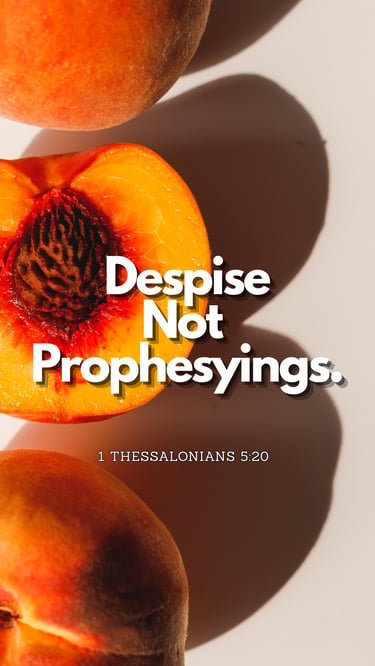
Don't forget the FREE wallpaper down below. Click on the image to download and save to your photos to use as your wallpaper and lockscreen.