Short Verses. BIg Impact.

The Frustration of the Harvest: Why Your Sowing Isn't "Working"
This blog post explores how the Parable of the Sower acts as a manual for spiritual warfare, teaching us to manage our expectations and persist in cultivating our hearts despite the resistance of traditions, distractions, and worldly cares.
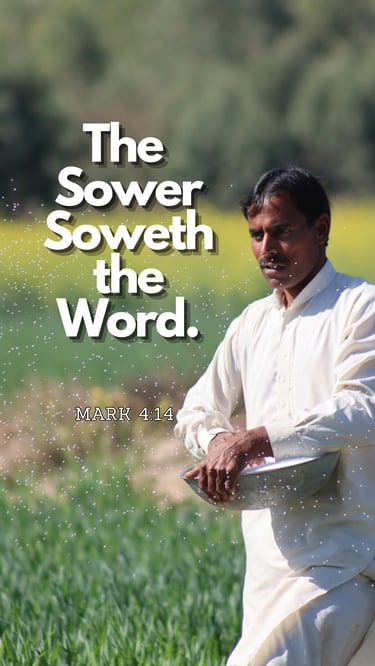
THE SOWER SOWETH THE WORD. WEEK 11
4/10/20263 min read


The Frustration of the Harvest: Why Your Sowing Isn't "Working"
We’ve all felt it: the stinging frustration of pouring Truth into a friend, a child, or even ourselves, only to watch it vanish. We share a word of wisdom, we pray, we study—and then... nothing. Or worse, we see a spark of growth that withers the moment things get difficult.
This is where the frustration turns into something darker. When people don’t respond the way we think they should, we often slip into anger, wrath, and malice. We start demanding a harvest from soil that isn't ready, and we grow bitter when our efforts don't yield immediate results.
But the Parable of the Sower isn't just a story about farming; it’s a manual for managing our expectations.
Setting the Expectation
When we understand the mechanics of the "Battle for the Garden," our perspective shifts. We realize that resistance isn't a sign of our failure—it’s a spiritual reality.
For others: Correct expectations keep us from being offended when someone "doesn't get it." We stop demanding they respond perfectly because we recognize the rocks and thorns they are battling.
For ourselves: It explains those days when we read the Word and it feels like it’s bouncing off the surface. It prepares us for the moments where we feel a surge of growth, only to see it choked out by a busy week.
The point of the parable isn't to guarantee a 100% success rate; it’s to teach us persistence. We keep sowing. We keep clearing the ground. We refuse to let the "failure" of the seed stop the work of the Sower.
The Battle for the Garden: A Manual for Spiritual Warfare
Mark 4, Matthew 13, and Luke 8 give us a three-dimensional view of why spiritual growth is a fight. If you are sowing the Word into your own heart or the hearts of others, you are entering a battlefield.
1. The Surface Level: Immediate Resistance
Mark 4 sets our expectations early: the Word is powerful, but it faces immediate, aggressive resistance. Sometimes, the Word doesn't even penetrate the surface. The "birds" (the enemy) snatch it away before it can even spark a single thought. This is the battle of distraction. If we can’t focus long enough to understand what we’re hearing, the seed never hits the soil.
2. The Hidden Rocks: The Danger of Tradition
Then there are the rocks. In a garden, rocks hide just beneath the surface. These represent "shallow man-made doctrines" and traditions. Jesus warned that clinging to human religious rules can actually make the Word of God "of none effect." If you choose the tradition of busyness over the Word of reconciliation, your faith will lack the depth to survive when life gets hot. Your children won't remember your "great ministry"; they’ll remember your absence.
3. The Thorns: The Deception of "Fine"
This is the part that should scare us the most. A thorny garden can still look green from a distance. Luke 8 identifies these thorns as the cares, riches, and pleasures of this life. They don’t kill the Word immediately; they just crowd it out.
The Cares: Spending all our energy "surviving" the week, worrying about the economy or our to-do lists.
The Riches: Jesus calls them "deceitful" for a reason. They promise to feed us, but they actually starve us.
If you spend your life building a "thorn bush" of financial security while neglecting the Word, you’ll have nothing to eat when the real storms of life hit. You’re choosing temporary shade over an eternal harvest.
How to Cultivate "Good Ground"
Good ground isn't something you are born with; it’s the work you do. To have a "Beatitude mind," you have to become a ruthless weeder.
Use the Diagnostic Tool (Matthew 13): Analyze your own mind. Does the Word "bounce off" because you're too busy? Inspect your life for any thought that has "exalted itself against Christ."
Pull the Thorns Today: Look at your schedule. Ask yourself: "Is this a fruit-bearing branch, or is this a thorn stealing my life?"
Practice Persistence (Luke 8): It’s one thing to clear the garden once; it’s another to keep it clear. It takes "patient endurance" to keep traditions from creeping back in and worldliness from sprouting again.
The Bottom Line: Spiritual Compound Interest
The Word of God is like spiritual compound interest. Thorns provide immediate "shade" (distraction and comfort) but offer zero long-term value. The Word, however, requires patience—the kind of patient endurance mentioned in Luke 8:15. It creates a reservoir of peace and wisdom that will feed you in your old age, in your grief, and in your final hours.
Don’t just hear the Word today. Inspect the soil. Clear the ground, hold fast to the Truth, and refuse to stop sowing. The harvest is worth the wait.
Join our Bible Memory Challenge LEVEL 2.
We are storing short verses in our heart that have big impact. Click HERE to join. And don't forget to download the wallpaper below to add to your phone to help you memorize this verse.