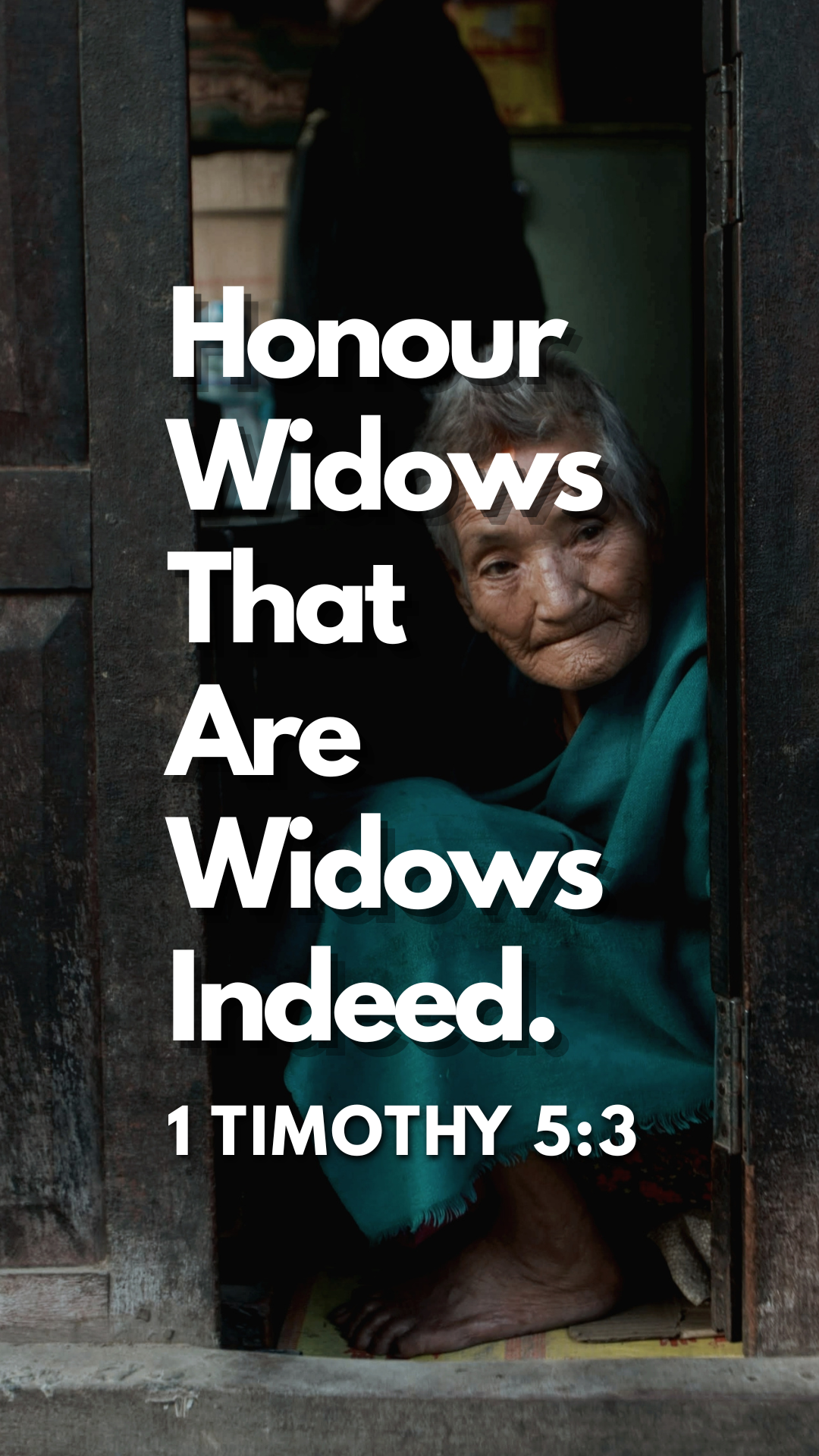
"Honour widows that are widows indeed." — 1 Timothy 5:3 (KJV)
What Does “Dead While She Liveth” Mean?
To be “dead while she liveth” in 1 Timothy 5:6 means a person is physically alive but spiritually dead, because her life is spent on pleasure rather than on God.
The Bible says you can be alive and dead at the exact same time. And Paul says it about widows the church was deciding whether to support.
It would be easy to read that verse, decide it’s about someone else, and move on. Don’t. By the end of this post, you’ll see that the standard Paul held these women to is the calling God has for every one of us.
What Does “Liveth in Pleasure” Mean in 1 Timothy 5:6?
In 1 Timothy 5:6, “liveth in pleasure” describes a life spent on comfort, entertainment, and doing whatever feels good, instead of on God. Paul sets it right beside the widow indeed in verse 5 so the contrast can’t be missed.
"Now she that is a widow indeed, and desolate, trusteth in God, and continueth in supplications and prayers night and day." — 1 Timothy 5:5 (KJV)
"But she that liveth in pleasure is dead while she liveth." — 1 Timothy 5:6 (KJV)
Both women buried a husband. Both lost the same thing. Nothing about their circumstances is different. The only difference is what each one did with what was left.
One turned her loss toward God, praying night and day. The other turned it toward herself. And the church wouldn’t put its resources behind the one living for herself, because what God gives His church is meant to bring forth life and fruit, not feed fleshly lusts.
Notice that Paul never calls her an unbeliever. She may still have been in the church. She may have looked fine from the outside. But God’s verdict was that she was already dead.
What Does a Widow Indeed Look Like in Real Life?
Anna the prophetess in Luke 2 is a widow indeed lived out. Widowed after seven years of marriage, she “served God with fastings and prayers night and day,” the same phrase Paul uses in 1 Timothy 5:5.
If you want to see 1 Timothy 5:5 lived out, look at Anna. Paul describes the kind of woman. Luke shows you one.
Anna was married only seven years before her husband died. Then Luke tells us:
"And she was a widow of about fourscore and four years, which departed not from the temple, but served God with fastings and prayers night and day." — Luke 2:37 (KJV)
Night and day. That’s the same phrase Paul uses for the widow indeed in 1 Timothy 5:5.
She could have spent those years feeling sorry for herself. Instead, she spent them in the temple, fasting and praying. Most people would call that a small, sad life. God didn’t.
Because one day, a young couple carried a baby into the temple. Luke 2:38 says she “gave thanks likewise unto the Lord, and spake of him to all them that looked for redemption in Jerusalem.”
She waited her whole life, and she got to meet the Redeemer. That’s what a life spent on God leads to. Devotion over despair.
How Does Someone End Up “Dead While She Liveth”?
Nobody decides to follow Satan in one step. In 1 Timothy 5:11–15 Paul traces the slide: the flesh starts wanting more, the first faith is cast off, ministry turns idle, idleness turns into gossip, and some “are already turned aside after Satan.”
He’s warning Timothy about younger widows who pledged themselves to a life devoted to Christ alone, trusting that Jesus was enough, before their hearts were ready to keep that pledge. Watch how it unfolds:
- 1. The flesh starts wanting more.“When they have begun to wax wanton against Christ, they will marry” (verse 11). Married life comes with attention, affection, and fleshly care, and that starts to look better than Christ alone.
- 2. The first faith is cast off.Their first faith was trusting that Jesus was enough. When they change their minds and go back on that pledge, Paul says “they have cast off their first faith” (verse 12).
- 3. The ministry turns idle.They may still go from house to house and call it ministry, but “they learn to be idle, wandering about from house to house” (verse 13).
- 4. The idle work turns into talk.“Not only idle, but tattlers also and busybodies, speaking things which they ought not” (verse 13).
- 5. The end of the road.“For some are already turned aside after Satan” (verse 15).
None of it starts with open rebellion. It starts with wanting the flesh satisfied. And that desire doesn’t stop at the wedding. It filters into everything, until even the ministry is about feeding self.
Paul isn’t against marriage. In verse 14 he tells the younger women to marry, bear children, and guide the house. The sin was making a pledge to Christ their hearts weren’t ready to keep, then breaking it for the flesh.
A full life God ordered leaves no room for the slide.
Does 1 Timothy 5:6 Apply to Everyone, or Just Widows?
It applies to everyone. If God expected a life spent on Him from grieving widows past sixty, who had every reason to rest, how much more does He expect it from teenagers, young adults, and parents?
Think about who God was speaking to here. These were women sixty years old and older. They had buried their husbands. Many had already spent decades raising children, lodging strangers, and relieving the afflicted. If anyone had earned the right to rest and enjoy themselves, it was them.
And God still expected a life spent on Him.
So if God expected that from grieving widows past sixty, how much more from the rest of us? Teenagers. Young adults. Parents. Everyone. Whatever reason you have for coasting, they had a better one.
The Pleasure That Doesn’t Look Like Sin
Here’s where this hits closest to home. “Living in pleasure” doesn’t have to mean wild parties. Most of the time, it looks completely harmless.
It looks like hours of scrolling and gaming. It looks like a life built around the next meal out, the next purchase, the next vacation, the next upgrade. None of it feels like rebellion. But every bit of it costs time, money, and strength.
And that time, money, and strength is exactly what verse 10 says a godly life is spent on: bringing up children, lodging strangers, washing the saints’ feet, relieving the afflicted. A life of comfort quietly spends what God meant for the poor, the needy, and His people.
The Widow Indeed Didn’t Start at Sixty
The woman who qualified for the church’s list at sixty didn’t become devoted at sixty. Verse 10 describes a whole lifetime of good works. She was reaping what she had sown for decades.
The same is true for you. The person you’ll be at sixty is being built right now, one choice at a time. You are writing your own verse 5 or verse 6 today.
Are You Alive Unto God, or Dead While You Live?
Here’s the hard question this verse asks every one of us. Be honest with yourself:
- Where does my time go?If your Bible only gets your leftover minutes, pleasure is already winning.
- Where does my money go?Is it feeding my comfort, or relieving the afflicted?
- Where do my talents and my mind go?Am I building up the body of Christ, or just building up me?
- What fills my empty hours?An idle life never stays empty. Something is filling yours.
Two widows. Same loss. One spent what was left on herself and was dead while she lived. The other spent it on God and got to see the Redeemer.
This Week’s Verse
"Honour widows that are widows indeed." — 1 Timothy 5:3 (KJV)
Keep reading: what “widows indeed” means, and what it means to be worse than an infidel.
The calling is high, and it’s for all of us —
fill your life with what God gave you to do.
Watch This Week’s Videos
See every video for 1 Timothy 5:3 in this week’s YouTube playlist.
Watch the Playlist