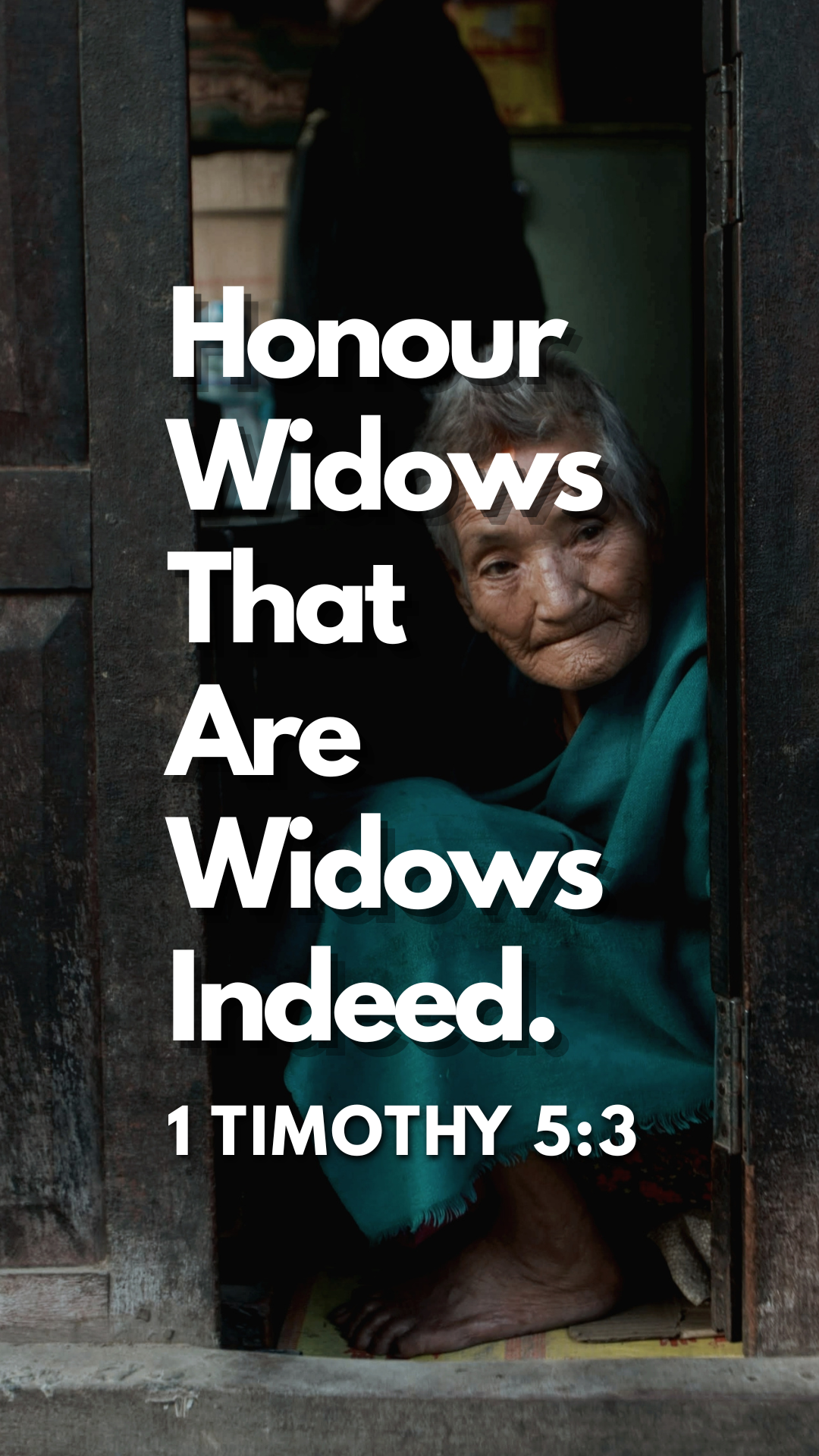
"Honour widows that are widows indeed." — 1 Timothy 5:3 (KJV)
What Does “Worse Than an Infidel” Mean?
To be “worse than an infidel” in 1 Timothy 5:8 means a believer who refuses to provide for his own family has denied the faith by his actions, falling below a standard that even unbelievers keep.
The Bible says some people who claim the faith are worse than unbelievers. And it’s not for what most people would guess. It’s for how they treat their own family.
Paul says this in the middle of a passage about widows. But the one in trouble isn’t the widow. It’s the family that leaves her for somebody else to take care of.
What Does 1 Timothy 5:8 Mean?
1 Timothy 5:8 means that how you treat your own family is a test of your faith. A believer who will not provide for his own has denied the faith by his actions, whatever his mouth says.
Here is the whole verse:
"But if any provide not for his own, and specially for those of his own house, he hath denied the faith, and is worse than an infidel." — 1 Timothy 5:8 (KJV)
Notice the order. Before Paul ever says “worse than an infidel,” he says “he hath denied the faith.” That person might never say a word against God. He might sit in church every Sunday. But his actions at home deny what his mouth claims.
An infidel is an unbeliever, someone without faith. Even many unbelievers take care of their own families. So a believer who won’t is falling short of a standard the world already keeps.
You can’t claim to love God and ignore the people He put in your own house.
Does the Bible Command Adult Children to Care for Their Elderly Parents?
Yes. 1 Timothy 5:4 says that if a widow has children or nephews, “let them learn first to shew piety at home, and to requite their parents: for that is good and acceptable before God.” Caring for elderly parents is a command, not a suggestion.
"But if any widow have children or nephews, let them learn first to shew piety at home, and to requite their parents: for that is good and acceptable before God." — 1 Timothy 5:4 (KJV)
- “Requite”means pay back. Your parents fed you, clothed you, and cared for you when you couldn’t do anything for yourself. When they grow old or are left alone, it’s your turn.
- “Piety at home”Caring for your parents isn’t separate from your walk with God. It is part of it, and God calls it “good and acceptable.”
- “Learn first”This isn’t something that switches on when you turn thirty. It’s learned, and it starts young. Maybe you can’t pay the bills yet, but you can start learning right now.
Who Counts as “His Own” in 1 Timothy 5:8?
“His own” starts with your household but reaches further. Verse 8 says “his own, and specially for those of his own house,” and verses 4 and 16 name children, nephews, and any believer who has widows in the family.
Paul’s circle is wider than the people under your roof. Your household comes first, but “his own” reaches further than that.
Verse 4 names children and nephews caring for a widow. Verse 16 says, “If any man or woman that believeth have widows, let them relieve them.” Grandparents, aunts, and relatives with nobody else all fall inside the circle.
So the question isn’t “Do I legally have to?” It’s “Who has God placed in my family that needs me?”
Why Did Paul Put Family Ahead of the Church?
Paul put family first so the church’s help could reach the widow who had no one. Believers were to relieve the widows in their own families, “that it may relieve them that are widows indeed” (1 Timothy 5:16).
The early church actually turned some widows away, which sounds heartless at first. Then you read the verse that tells you where those widows went instead.
"If any man or woman that believeth have widows, let them relieve them, and let not the church be charged; that it may relieve them that are widows indeed." — 1 Timothy 5:16 (KJV)
Believers with a widow in their own family were to take care of her themselves. That held even if she had spent her whole life living for herself.
The end of the verse tells you why: “that it may relieve them that are widows indeed.” The church wasn’t being stingy. It was putting its care in the right order. Family carried family, so the church could carry the widow who had nobody.
When a family dumps its own on the church, the widow with no one else is the one who goes without. Skipping your duty at home doesn’t just fail your family. It takes from someone else.
How Can You Start Showing Piety at Home Now?
You don’t have to wait until your parents are old to start obeying 1 Timothy 5:4. “Learn first” means you start practicing now, with whatever you have: helping, respecting, working, and showing up for your family.
- Help your mom.Clean the house, do the dishes, or cook a meal without being asked.
- Respect your dad.Listen when he talks, and do what he asks the first time.
- Put in the work.Mow the lawn, run errands, or carry in the groceries.
- Learn useful skills.Learn to repair things so your family doesn’t have to pay someone else.
- Show up.Spend time with your grandparents, and check in on relatives who are alone.
And ask yourself the harder question. What order is your life in? Is God first, or does He just get whatever’s left after you’ve taken care of you? Are you carrying your own family, or leaving them for somebody else to carry?
When your priorities are in God’s order, everybody gets cared for, from the right hands.
This Week’s Verse
"Honour widows that are widows indeed." — 1 Timothy 5:3 (KJV)
Keep reading: what “widows indeed” means, and why Paul says one kind of widow is dead while she liveth.
Carry your own —
so the church can carry the one who has nobody.
Watch This Week’s Videos
See every video for 1 Timothy 5:3 in this week’s YouTube playlist.
Watch the Playlist